Read the units before you compare results
| Term | Unit | What it describes |
|---|---|---|
| Body-fat percentage | % | The estimated share of body weight classified as fat |
| Fat mass | kg or lb | The estimated weight classified as fat |
| Fat-free mass | kg or lb | Body weight minus estimated fat mass |
A percentage and a mass answer different questions. A 20% result does not mean 20 kg of fat. It means that one fifth of the body weight used in the calculation is estimated as fat. The mass changes when body weight changes, even if the percentage stays the same.
Use the arithmetic carefully
| Step | Calculation | Result |
|---|---|---|
| Fat mass | 80 kg × 20 ÷ 100 | 16 kg |
| Fat-free mass | 80 kg − 16 kg | 64 kg |
| Check | 16 kg + 64 kg | 80 kg |
The same arithmetic works in pounds when every value uses pounds. Keep the unrounded result while you calculate, then round the displayed values. A small difference can appear when rounded values are added back together.
Fat-free mass includes more than skeletal muscle. It also includes water, bone, organs, and other non-fat tissue. A fat-free-mass value does not identify how much skeletal muscle a person has.
Keep the body-fat method attached to the result
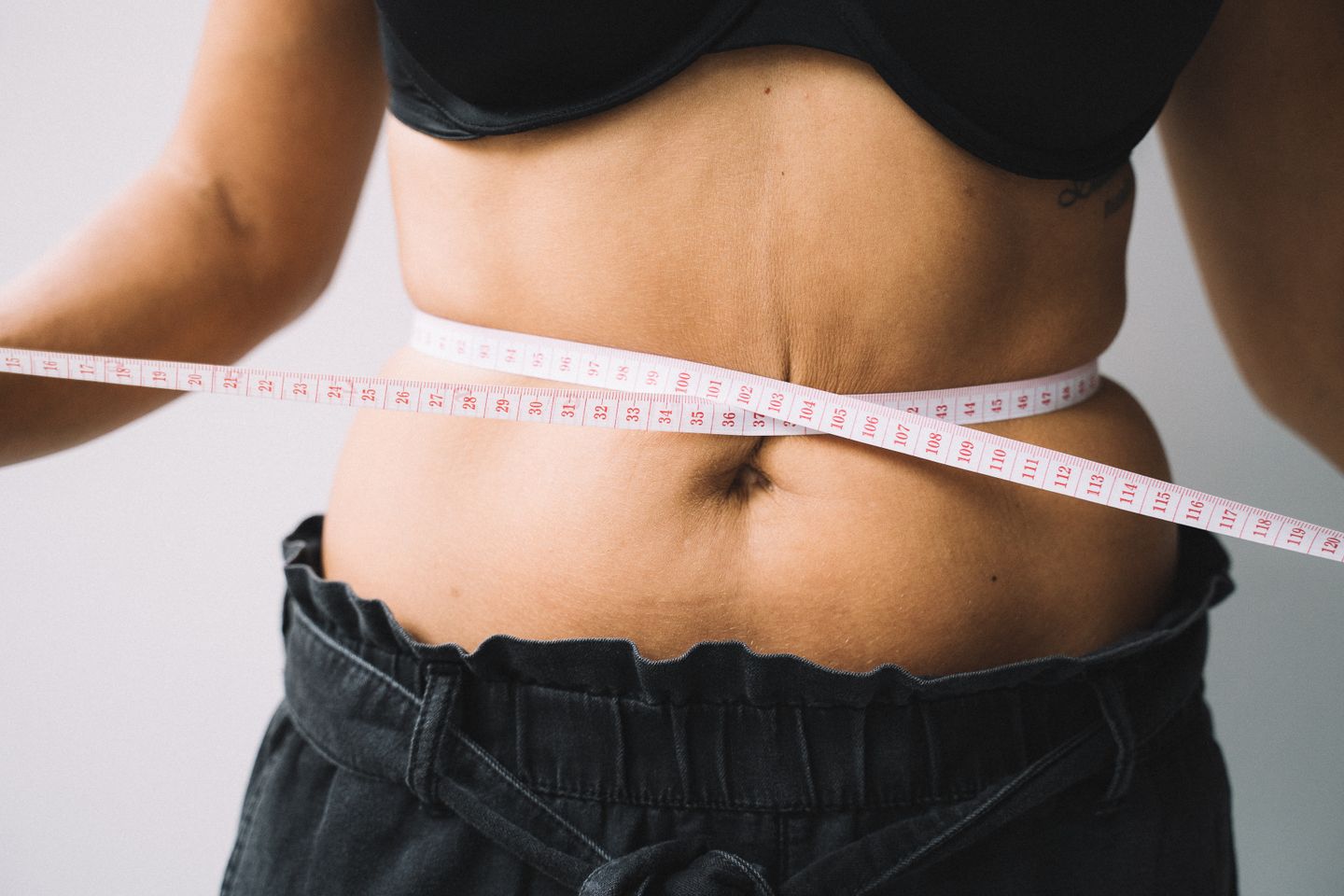
A tape equation, a skinfold equation, a bioimpedance device, and an entered scan result can produce different body-fat percentages. Each method uses its own inputs, assumptions, and reference data. Once the percentage changes, the calculated fat mass and fat-free mass change too.
Some reports use the term lean mass. The meaning can vary by device or report. Read the method notes before treating lean mass as interchangeable with fat-free mass or skeletal muscle mass.
Compare a later result on the same basis
- Save body weight, body-fat percentage, units, date, and the method name.
- Keep the original tape sites, device settings, or report details with the result.
- Calculate fat mass from the same percentage source when you want to compare dates.
- Keep results from another method in a separate series.
Use the body-fat calculator to see the percentage, fat mass, and fat-free mass from one stated method. Use the FFMI calculator when you need to place fat-free mass in height context. Use the muscle-mass guide when the question is about a skeletal-muscle estimate rather than the non-fat remainder of body weight.
Common questions
Is body fat percentage the same as fat mass?
No. Body fat percentage is the share of body weight estimated as fat. Fat mass is the estimated weight of that fat, usually shown in kilograms or pounds.
What does fat-free mass mean?
Fat-free mass is body weight minus estimated fat mass. It includes skeletal muscle, water, bone, organs, and other non-fat tissue. It is not a direct muscle measurement.
Can I compare fat mass from different body-fat methods?
Keep results from different methods separate. A changed tape site, device, equation, or body-fat input can change the calculated fat mass even when body weight is the same.
CHECK THE EVIDENCESources & limitations3 sources
Sources checked September 20, 2026. These notes explain methods and assumptions. They have not received an independent clinical review.
- VanItallie and colleagues define separate fat mass and fat-free mass indexes from body composition and height.pubmed.ncbi.nlm.nih.gov
- Gallagher and colleagues describe body-fat percentage reference values that vary by age, sex category, and population.pubmed.ncbi.nlm.nih.gov
- Temple and colleagues compared several anthropometric body-fat equations with air-displacement plethysmography in women aged 18–55.pmc.ncbi.nlm.nih.gov